Ukulele, chord by chord.
The parts of a ukulele, how it is tuned, how to read a chord diagram, your first six chords, how tab works, some traditional tunes to play, and where the ukulele came from. Every fact is checked against Britannica, the Smithsonian’s National Museum of American History or the Department for Education, and every one links to its source.
The short version
The ukulele is a small guitar that comes from the machete, a four-stringed guitar brought to Hawaii by the Portuguese in the 1870s. Britannica: ukulele
The ukulele is a Hawaiian instrument, but it grew out of Portuguese instruments: the machete do braça, the braguinha, the rajão and the cavaquinho. Smithsonian National Museum of American History: 5 things you probably didn’t know about the ‘ukulele
The ukulele is tuned G–C–E–A, all in the octave around middle C. Britannica: ukulele A simple way to check the tuning is to strum all four strings with your thumb and sing “My dog has fleas”. Smithsonian National Museum of American History: 5 things you probably didn’t know about the ‘ukulele
Today the ukulele is loved because it is fairly easy to play, easy to carry and has a light-hearted sound. Smithsonian National Museum of American History: the great 1915 ukulele craze
Start exploring
Where the facts come from
The instrument, its size and its tuning come from Britannica’s ukulele article, and chords and tab from Britannica’s articles on harmony and tablature. The history comes from two articles by the Smithsonian’s National Museum of American History. The school notes come from the national curriculum for music in England. Where sources say something in different ways, we give each one.
And what does “ukulele” mean?
Britannica says the name ukulele is Hawaiian for “flea”. Britannica: ukulele In Hawaiian, ʻuku means flea and lele means to jump. Smithsonian National Museum of American History: 5 things you probably didn’t know about the ‘ukulele The Smithsonian gives three possible explanations for the name: jumping fleas, jumping men, or a gift from afar. Smithsonian National Museum of American History: 5 things you probably didn’t know about the ‘ukulele
Two sources, more than one answer: see when sources disagree.
Enjoying the ukulele guide? Help keep the lights on.
This site is hand-built, fact-checked and free to read. If a chord, a tune or one of Useless’s notes helped, a little support keeps it going and helps the network grow.
Ukulele printables
Fact-checked PDFs in A4 and US Letter, for young beginners, older learners, families, players who want a quick reference, and the grown-ups teaching them.
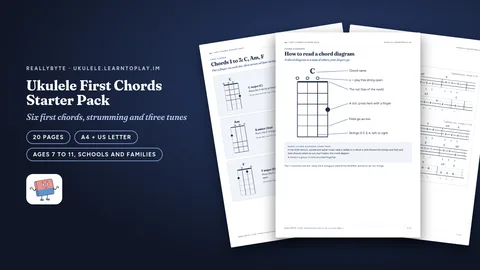
Ukulele First Chords Starter Pack
Ages 7 to 11, schools and families
The parts of the ukulele, the four strings and their tuning, how to read a chord diagram, six first chords, strumming patterns, chord-change practice, three traditional tunes in tab, a true-or-false quiz, a crossword, a word search, a certificate and a full answer key
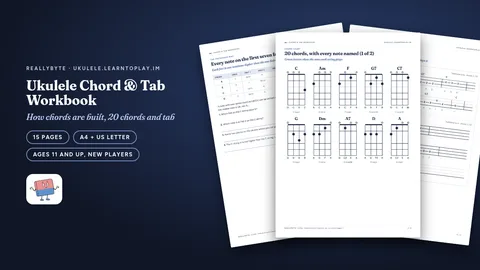
Ukulele Chord & Tab Workbook
Ages 11 and up, new players
How chords are built, 20 chord diagrams with every note named, name-the-notes worksheets, the fretboard note map, how to read tab, five traditional tunes in tab with chords, a page to write your own, and full answers

Ukulele Family Activity Pack
Families, ages 5 and up
A ukulele colouring page, label-the-parts, a ukulele maze, design your own ukulele, copy-the-chord and match-the-chord games and a 20-question family quiz to do together, with answers
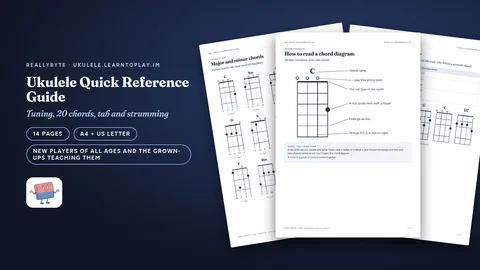
Ukulele Quick Reference Guide
New players of all ages and the grown-ups teaching them
The parts, the tuning and how to check it, reading chord diagrams and tab, a 20-chord chart, the fretboard note map, chord families for five keys, strumming patterns and a short history, each fact with its source
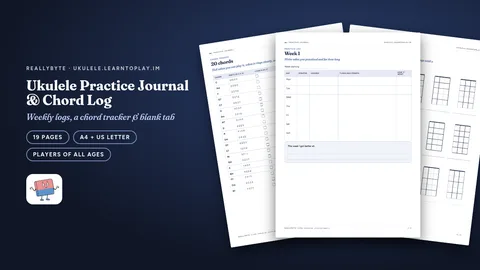
Ukulele Practice Journal & Chord Log
Players of all ages
Goals, 8 weekly practice logs, a chord tracker, a tune log, blank chord diagram pages, blank tab pages and a progress tally
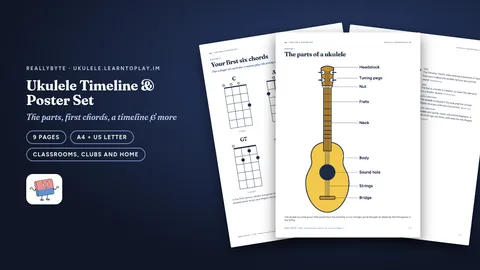
Ukulele Timeline & Poster Set
Classrooms, clubs and home
Six poster pages: the parts of the ukulele, the four strings and their tuning, the first six chords, a 20-chord chart, a timeline from the 1870s to the 20th century, and the ukulele in numbers
 Best value
The Complete Ukulele Printables Bundle
All six packs plus a bundle guide, A4 and US Letter, in one download. $12.99 instead of $26.44 bought separately.